
- About Us
- Facilities
- Patient Stories
- Media & Events
- CSR
- Contact Us
- Book Appointment
From a grain of sand to a golf ball — every kidney stone has a story, and a solution. Our team combines India's most advanced lithotripsy workstation with laser, scope and shock-wave techniques to choose the gentlest, most effective treatment for your specific stone.
Kidney stones, or nephrolithiasis, are hard mineral crystals that form within your kidneys when your urine becomes too concentrated. They can range from as small as a grain of sand to as large as a golf ball.
Your kidneys work as efficient filtering systems, removing waste and excess substances from the blood. But when urine contains too much calcium, oxalate or uric acid — and not enough fluid to dissolve them — these substances clump, crystallise, and harden into stones.
Some stones stay in the kidney without causing problems. Others travel down the ureters (the tubes connecting kidneys to bladder), where they can cause intense pain and block urine flow.
Smaller stones (under 5mm) often pass on their own. Larger ones can get stuck in the ureter, causing intense pain and potential kidney damage. Don't ignore these warning signs.
Sharp, stabbing pain below the ribs, often radiating to the lower abdomen and groin — sometimes in waves.
Pink, red or brown-tinged urine (haematuria) is a classic warning sign that needs immediate attention.
If pain is accompanied by fever, it may indicate infection — this is a medical emergency.
Pain or burning sensation while passing urine, often with increased urgency or frequency.
The pain can be so intense it triggers nausea, vomiting, or restlessness — unable to find a comfortable position.
Changes in urine appearance or odour can signal infection alongside the stone.
Family history of stones, dehydration, high-salt or high-protein diets, obesity, certain medications (diuretics, calcium antacids), and excess Vitamin C or calcium supplementation can all increase your risk. Conditions like cystinuria and renal tubular acidosis are inherited causes. Identifying the underlying cause is the key to long-term prevention.
No two kidney stones are alike. We tailor treatment based on stone size, location, composition, and your overall health.
For small stones (under 5mm) that are likely to pass naturally — we support the process with hydration protocols, alpha-blocker medication, and pain management.
Extracorporeal Shock Wave Lithotripsy uses focused shock waves from outside the body to break stones into tiny fragments that pass naturally through urine.
A flexible scope is passed through the body's natural urinary opening to the kidney. A laser then breaks the stone, which is removed in fragments. No cuts. No scars.
A thin scope is passed up through the urethra and bladder to reach stones lodged in the ureter. The stone is fragmented with laser and removed.
For large or complex kidney stones, a small keyhole incision is made in the back. A scope reaches the stone, which is broken and removed in one session.
For patients with recurrent stones, we don't just treat — we investigate why they form. Blood, urine and stone analysis identify the underlying cause for lifelong prevention.
Integrated workstation combining ESWL, fluoroscopy, ultrasound and endoscopy — for safer, faster, more precise stone treatment.
From conservative management to ESWL, RIRS, URSL and PCNL — we choose the technique that suits your stone, not just the one we offer.
Holmium and Thulium fibre lasers with 3D/4K imaging — for precise stone fragmentation and minimal tissue damage.
Most patients are discharged within 24 hours after RIRS or URSL — back home, back to family, back to normal.
We don't just remove the stone — we investigate why it formed, and build a plan to keep it from coming back.
Cashless approval handled in-house. Detailed cost estimates upfront — no surprises, no hidden charges.
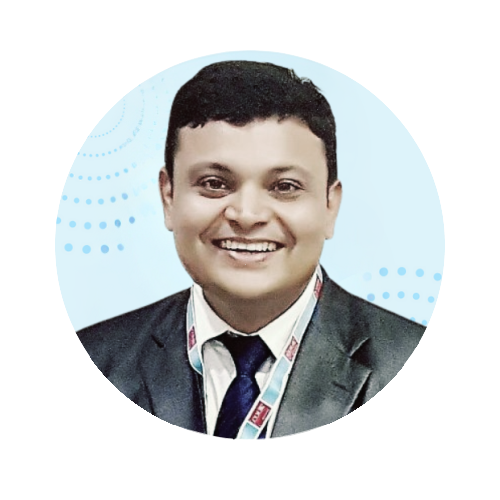
Pune's pioneer in laser stone management with 18+ years of experience in complex robotic & urological surgeries.
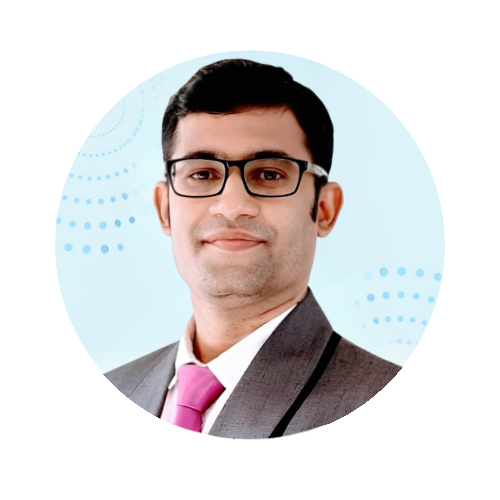
Specialist in endourology and laser stone fragmentation, ensuring 4,000+ successful minimally invasive procedures.
"I was terrified of kidney stone surgery. Dr. Gandhi explained RIRS step by step. No cuts, no scars — and I was discharged the same evening. I can't thank the team enough."
"My 18mm stone was crushed using ESWL in one session. No anaesthesia, no admission. Walked in at 10 AM, walked out at noon, back to office next day."
"Family member treated for kidney stone. Very good treatment given by the doctor and Healing Hands team. Thank you doctor."
Common signs include severe pain in your side or back below the ribs, blood in urine, painful or frequent urination, nausea and vomiting, and sometimes fever. Symptoms can mimic other conditions like UTI or appendicitis, so proper imaging (ultrasound or CT scan) and urine tests are essential for accurate diagnosis.
Yes. Stones smaller than 5mm often pass on their own with adequate hydration and minor discomfort. We may prescribe medications to ease passage. Stones larger than 5mm have a much higher chance of getting stuck in the ureter, and may need active intervention to avoid kidney damage.
It depends on stone size, location, composition, and your overall health. As a general guide: stones under 5mm — conservative management; 5–20mm in the kidney — ESWL or RIRS; stones in the ureter — URSL or RIRS; stones larger than 2cm or complex stones — PCNL. Your surgeon will recommend the best option after reviewing your scans and tests.
The procedures themselves are performed under anaesthesia, so you feel no pain during surgery. Post-operative discomfort is usually mild — most patients describe a feeling of pressure rather than pain. With laser-based techniques like RIRS, recovery is remarkably comfortable, and standard pain medication is sufficient.
After RIRS or URSL: most patients return to desk work within 5–7 days. After ESWL: usually next day. After PCNL: typically 10–14 days. Heavy physical activity should be avoided for 3–4 weeks. Your surgeon will give you specific guidance based on your job and procedure.
Recurrence rates can be high (around 50% over 10 years) if the underlying cause isn't identified. That's why we go beyond just removing the stone — we test the stone composition, perform a 24-hour urine analysis, and build a personalised prevention plan including diet, hydration targets and, if needed, medication. Patients who follow the plan see recurrence rates drop dramatically.
Yes. All kidney stone procedures (ESWL, RIRS, URSL, PCNL) are covered by health insurance and corporate plans. Healing Hands Clinic is empanelled with all major TPAs and offers cashless treatment. Our in-house insurance team handles approvals and paperwork.
Drink at least 2.5–3 litres of water daily, reduce excess salt and animal protein, limit oxalate-rich foods (spinach, beetroot, nuts) if you've had calcium stones, add lemon juice to your water, avoid aerated drinks, and maintain a healthy weight. People with a family history of stones should consider an annual urology check-up.
Access advanced urological care across Pune. Choose the centre most convenient for you.
Ground Floor,Millenium Star Extension, Adjacent to Ruby Hall Entrance Gate, Dhole Patil Road, Pune, Maharashtra 411001.
1st floor, Crystal Empire Building, Opposite Hotel Sadanand, Next to Amar Business Park, Baner Road,Pune, Maharashtra 411045.
Second floor, Premier Plaza, Near Big Bazar & Big Cinema, Above Mac Donald, Chinchwad, Pune - 411019.
101/102 Girme Towers, Salunkhe Vihar Road, above ICICI Bank, Wanowrie, Pune, Maharashtra 411040.
Healing Hands Clinic Ground Floor, Atmosphere Building, Ambegaon Pathar, Ambegaon Budruk, Pune 411046.
Sr No.123, Amrutdhara Commercial Hub, Alandi Rd, next to Sai Mandir, Wadmukhwadi, Charholi Budruk, Pune, Maharashtra 412105.
Gokul Complex, Near HDFC Bank,Wage Vasti Nashik Road, Chakan, Pune -410501 Tal: Khed, Dist: Pune.
1st floor, The Pune East building, Post Kadamwakwasti, Kawdipat, Pune Solapur Road 412201.
AH Infotech, 3rd Floor, Above. SBI MIDC Hinjewadi Branch, Hinjewadi Phase 1 Rd, Hinjawadi, Pune, Maharashtra 411057.
2nd floor 220, Healing hands clinic, Marvel sangria, NIBM Rd, Mohammed Wadi, Pune, Maharashtra 411060.
schedule your consultation with our experts now.
Healing Hands Clinic is India’s most trusted center of excellence for proctology, specializing in advanced, minimally invasive laser treatments for anorectal conditions. Founded by Dr. Ashwin Porwal, a pioneer who introduced laser proctology to India, the clinic provides world-class, focused care for ailments like piles, fistulas, fissures, pilonidal sinus, and chronic constipation. Utilizing state-of-the-art infrastructure and modern techniques like DLPL, they prioritize treatments that provide minimal pain, negligible recurrence rates, shorter hospital stays, and quicker recovery.