That bulge you've been ignoring? It won't go away on its own. But the good news is that fixing it is far simpler than you think.
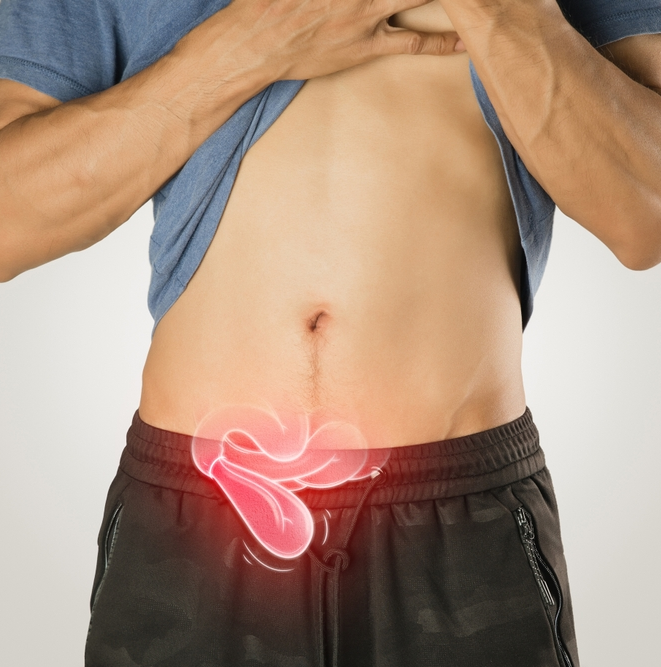
Hernias are one of the most common surgical conditions in the world. At Healing Hands Clinic, we treat them with minimally invasive techniques, advanced mesh technology, and a level of specialisation that most general hospitals simply don't offer.
Whether you've just noticed a small lump, or you've been living with discomfort for months, this page will walk you through everything you need to know — clearly and honestly.
Pune Station
Chinchwad
Baner
Wanowrie
Dighi
Chakan
Katraj
Hadapsar
Swargate
Undri
Hinjawadi
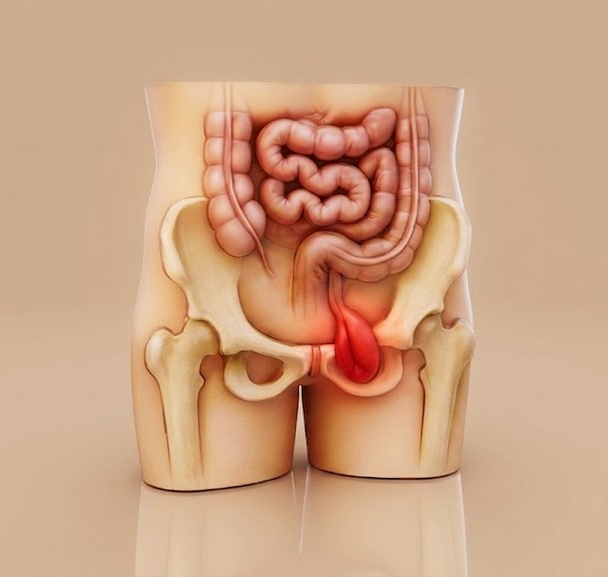
Think of your abdominal wall as a strong protective covering around your internal organs. A hernia happens when there's a weak spot in that wall. When an organ or fatty tissue pushes through it, creating a visible or palpable bulge, we call it a hernia.
It sounds alarming, but hernias are extremely common. They can develop from the strain of heavy lifting, persistent coughing, previous surgery, pregnancy, or simply from a natural weakness in the muscle wall that has been there since birth.
The most important thing to understandHernias do not heal on their own. They tend to get larger over time; the larger they get, the more complex the repair. Getting treated early makes everything easier.
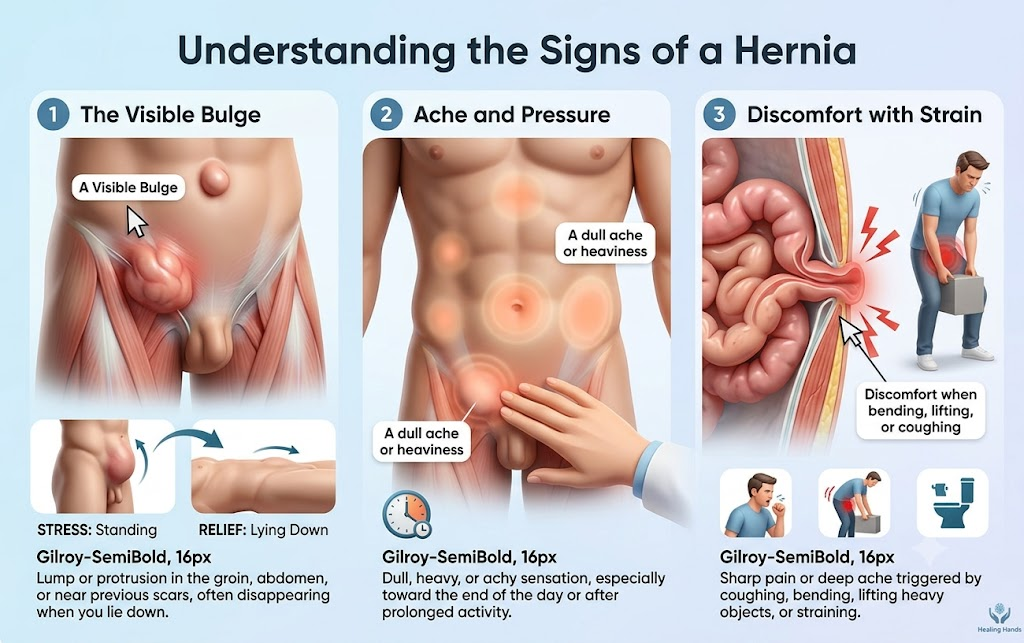
Not all hernias are painful. Some are simply a bulge you notice while getting dressed. Others cause a dull ache that worsens through the day. Here are the most common signs:
If the bulge becomes hard, painful or cannot be pushed back in — see a doctor at the earliest. This may indicate a strangulated hernia, where the blood supply to the trapped tissue is cut off. This is a surgical emergency.
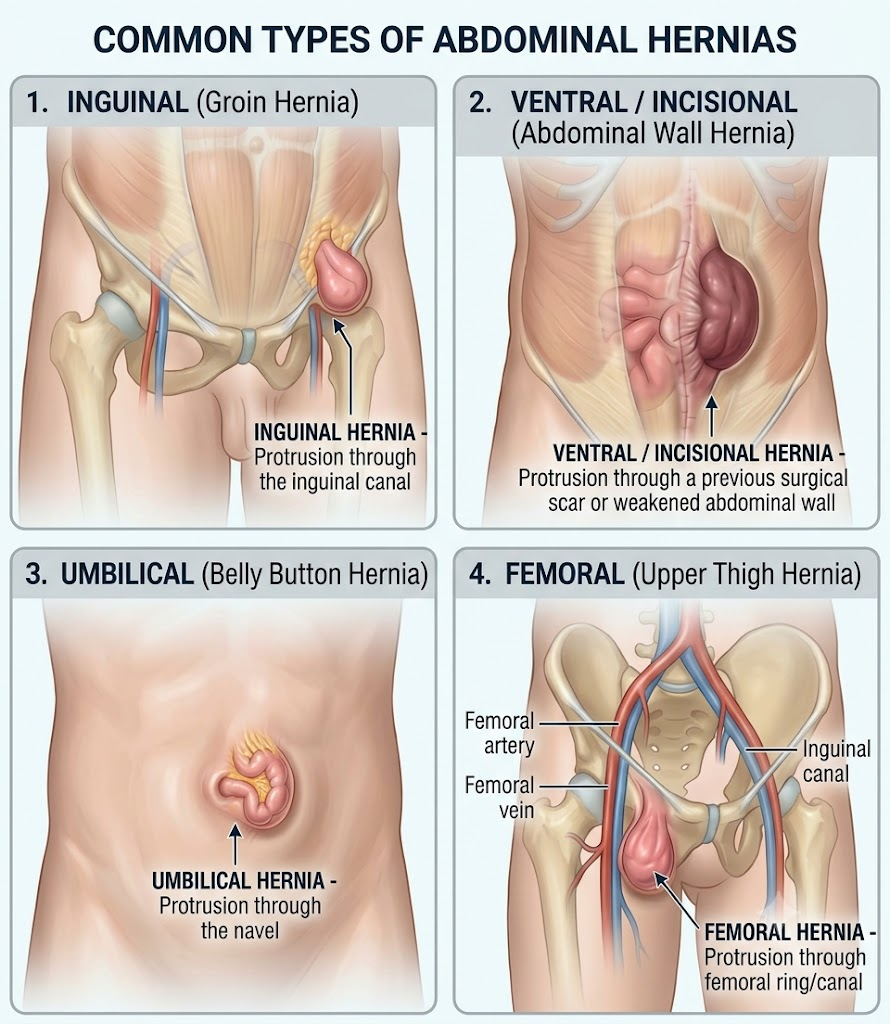
Types of Hernia We Treat at HHC
Our surgeons are experienced in treating the full spectrum of hernias, from the most common to the most complex.
The most common type, especially in men. A portion of the intestine or fatty tissue pushes through a weak spot in the lower abdominal wall into the inguinal canal (groin area). At HHC, we repair inguinal hernias using Laparoscopic (TEP/TAPP) technique with a 3D mesh — offering precision, minimal pain, and faster recovery.
A ventral hernia can develop anywhere along the midline of the abdomen. An incisional hernia specifically occurs at the site of a previous surgical scar, where the muscle wall may have weakened. At HHC, we repair both types using 15D Dual Mesh — a premium dual-sided mesh that integrates with surrounding tissue for lasting, recurrence-resistant repair.
Occurs when tissue pushes through the abdominal wall near the navel. Common in infants, but also seen in adults — particularly those who are overweight or have had multiple pregnancies. At HHC, we use 15D Dual Mesh for umbilical hernia repair, providing durable, long-lasting reinforcement from both sides of the abdominal wall.
Less common than inguinal hernias, femoral hernias occur just below the groin crease and are more frequent in women. They carry a higher risk of complications and are best treated promptly.
There is no single approach that works for every hernia. The right technique depends on the type, size, and location of your hernia — as well as your age, fitness, and medical history. At HHC, your surgeon will discuss all options with you and recommend the approach that offers the best long-term outcome for your specific situation.
Our preferred approach for inguinal hernia repair is laparoscopic surgery — performed through key-hole incisions (each less than a centimetre) rather than a single large cut. A tiny camera guides the surgeon with a magnified, high-definition view of the operating field.
The hernia is repaired using a 3D mesh — a specially shaped, three-dimensional mesh that conforms naturally to the body's anatomy. Unlike flat mesh, 3D mesh sits comfortably in the space without needing to be stitched into surrounding tissue, which significantly reduces the risk of chronic post-operative pain.
Technique used : TEP (Total Extra-Peritoneal) or TAPP (Trans-Abdominal Pre-Peritoneal). Your surgeon will advise the most appropriate approach.
In selected cases — including large hernias, recurrent hernias following previous laparoscopic repair, or where anaesthesia considerations make laparoscopic surgery less suitable — we perform open hernia repair.
For open repair, we use Filaprop™ Mesh — a high-quality, lightweight polypropylene mesh with a filament structure designed to minimise the foreign body reaction, reduce stiffness, and promote natural tissue integration. It provides strong, reliable reinforcement while remaining comfortable over the long term.
Technique used: Lichtenstein repair, performed under local, spinal, or general anaesthesia depending on your case.
Hernias of the abdominal wall — including those at or near the navel, along the midline, or at the site of a previous scar — require a repair that supports the abdominal wall from the inside as well as the outside. For these cases, we use 15D Dual Mesh.
15D Dual Mesh is a dual-sided composite mesh — one side is designed to integrate firmly with the abdominal wall tissue, while the other side is smooth to prevent adhesion to internal organs. This design provides durable, recurrence-resistant repair while being safe to place against the bowel and other abdominal contents.
Technique used: Laparoscopic or open placement, chosen based on hernia size and your anatomy.
Mesh is at the heart of every modern hernia repair. It reinforces the weakness in the abdominal wall and dramatically reduces the chance of the hernia coming back. But not all meshes are the same, and the right choice matters.
3D Mesh for laparoscopic inguinal repair. FILAPROP for open repair. 15D Dual Mesh for ventral and umbilical repair.
Each is chosen for a reason — to give you the best outcome for your specific anatomy.
Recognised by Dr. John Murphy — Ex-President, American Hernia Society
Book a consultation with our hernia specialists. Same-day appointments available at our Pune centres.
schedule your consultation with our experts now.
Healing Hands Clinic is India’s most trusted center of excellence for proctology, specializing in advanced, minimally invasive laser treatments for anorectal conditions. Founded by Dr. Ashwin Porwal, a pioneer who introduced laser proctology to India, the clinic provides world-class, focused care for ailments like piles, fistulas, fissures, pilonidal sinus, and chronic constipation. Utilizing state-of-the-art infrastructure and modern techniques like DLPL, they prioritize treatments that provide minimal pain, negligible recurrence rates, shorter hospital stays, and quicker recovery.

Disclaimer : The information on this site should not be considered as medical advice. Please consult a doctor for determining the best procedure as well as the most appropriate for your proctological needs.