
- About Us
- Facilities
- Patient Stories
- Media & Events
- CSR
- Contact Us
- Book Appointment
 India’s Proctology Experts
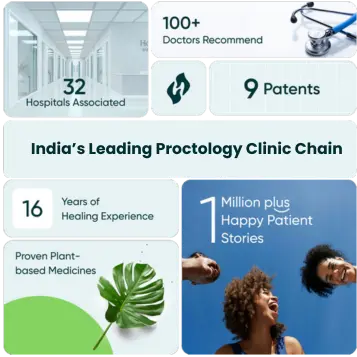
 Trusted by Lakhs
 Experienced Doctors




Early hernia treatment is essential to prevent serious complications such as strangulation, which can cut off blood supply to the affected organ, and in rare cases, tumorous changes. Homeopathy and Ayurveda are ineffective, as hernia is a physical condition that requires surgical correction.
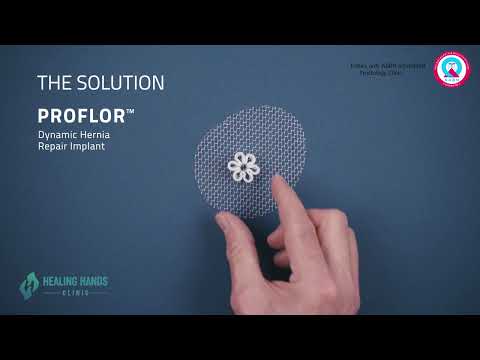
3D Mesh Hernia Repair is currently the most advanced and reliable treatment option. At Healing Hands Clinic Chh.Sambhajinagar, we also offer Proflor, an innovative hernia repair technique that is safe, quick, and painless, often performed as a day-care procedure. You can consult our expert hernia surgeons in Chh.Sambhajinagar to determine the most suitable treatment for your condition.
A hernia occurs when an internal organ (such as the intestine or fat) pushes through a weak or sensitive area in the abdominal wall or tissue.
There are different types of hernias, including:
At Healing Hands Clinic Chh.Sambhajinagar, our hernia specialists diagnose hernias accurately during physical examinations and routine checkups. Since hernias do not heal on their own, timely consultation with a hernia surgeon is crucial. Ignoring a hernia can lead to serious complications, including strangulation, which can be life-threatening.
Listed below is a concise description of some of the common hernias. Although there are other types too, they are quite rare and beyond the scope of this piece of information
Listed above is a concise description of some of the common hernias. Although there are other types too, they are quite rare and beyond the scope of this piece of information
The diagnosis of hernia is usually a clinical one, which means that your doctor will go through a history of your symptoms followed by a brief physical examination. During this check up she/he may feel the area of bulge by raising your abdominal pressure (this is done by making you stand/cough ), as this manoeuvre makes the hernia more obvious. In case you have an inguinal hernia, the doctor will feel for the potential pathway by examining along your scrotum.To summarise, in vast majority of cases where there is an obvious swelling in the groin/abdominal area, which increases in size on standing, straining or coughing, a clinical diagnosis of hernia is made and NO TESTS are needed. More challenging diagnoses are best performed by hernia specialists.
The treatment is based on the features of the hernia, its impact on your quality of life, and your general state of health. Treatment options may include observation, use of a supportive device, or surgery. Surgery is the only way to fix a hernia. In some cases emergency surgery is required. The treatment option that is right for you will be based on a discussion between you and your surgeon
Indications for hernia repair surgery include :
The laparoscopic repair uses small incisions on the abdominal wall through which the instruments are placed into the abdominal cavity. The abdomen is filled with air and the repair is guided by the use of a camera. The hernia contents are brought back into the abdominal cavity and a mesh is secured in place to cover the hernia defect from the inside. The mesh helps to prevent its recurrence. The laparoscopic repair has the advantages of quicker recovery, less pain, and less risk of infection.
A mesh is a supporting structure used to give strength to the hernia repair. It is used to cover the defect and reduce tension in the repair. Tension, otherwise, can lead to the recurrence of the hernia.
The mesh is made of synthetic material such as polypropylene or polyester. Alternatively, the mesh may be a biologic graft derived from animal tissue. The biologic grafts are often used if there is a great concern for infection as they tend to be resistant to infections.
The open repair is the traditional approach to hernia repair surgery with an incision made over the area of the hernia. The contents are returned back into the abdominal cavity and the sac is removed. Depending on factors such as the location and the size of the hernia, a mesh is often used to cover the area of the hernia defect. Otherwise, the defect is closed with sutures.
The open approach is commonly used for very large hernias or those that are complicated by factors such as bowel obstruction, infection, incarceration, strangulation, or recurrences.
The decisions regarding the laparoscopic vs. open approach hernia repair surgery and regarding use of mesh vs. no mesh will be individualized based on the characteristics of the hernia and the discussion you have with your surgeon.
We are recognized as the most innovative proctology hospital, pioneering our own treatment methods for intricate Anorectal conditions. Our primary focus is on curing with care.

Hernias do not get healed on their own and they are bound to increase in size with time. If you notice a visible bulge or pain upon standing, while coughing, or lifting weights, surgery may be advised. Doctors at Healing Hands Clinic Chh.Sambhajinagar first assess the type, size, and risk of complications before recommending treatment to ensure surgery is done only when needed.
Hernia surgery has immensely advanced with minimally invasive and tension-free mesh techniques. Presently, modern laparoscopic and 3D mesh repair procedures have lower recurrence rates, minimal pain, and faster recovery at higher centres under experienced surgeons.
With newer surgical techniques, most patients are ambulating the same day and resuming routine activities the next day. Complete internal healing may take several weeks, but protracted bed rest is not required.
Ignoring a hernia can lead to complications such as obstruction or strangulation, where blood supply to the intestine is cut off; this now becomes a surgical emergency. Early treatment helps avoid emergency surgery and allows planned, safer repair with better outcomes.
All major health insurance policies are accepted at Healing Hands Clinic Chh.Sambhajinagar for the treatment of hernias. Various insurance claims are available through the insurance support team members of the clinic. Patients need not worry about the cost factor, as the insurance team will assist them throughout the treatment process with minimal cost burden on them.
schedule your consultation with our experts now.
Welcome to Healing Hands Clinic, where our expert team provides compassionate and specialized care in proctology. Our state-of-the-art facility ensures the highest standards of treatment and comfort for our patients. We prioritize your well-being and strive to make your experience as seamless and stress-free as possible. Trust Healing Hands Clinic for professional and personalized proctological care.