- About Us
- Facilities
- Patient Stories
- Media & Events
- CSR
- Contact Us
- Book Appointment
 India’s Proctology Experts
 Trusted by Lakhs
 Experienced Doctors





Pilonidal sinus is a common condition in which a small cavity is present near the tailbone or lower back region of the body. It is thought to be caused by ingrown hair or foreign material that enters the skin and causes irritation. People with pilonidal sinus usually experience pain and swelling around the affected area. In some cases, there may also be discharge of pus or blood. This condition is frequently seen among young adults and professionals with prolonged sitting habits, which is increasingly common in urban cities like Shambajinagar.
Healing Hands Clinic is a leading treatment centre and a pioneer in the field of proctology—a specialty focused on the management of anorectal conditions such as piles, fissure, fistula, pilonidal sinus, and constipation. The clinic brings its advanced, evidence-based treatment protocols to patients in Shambajinagar, offering novel and minimally invasive solutions aligned with global standards of care.
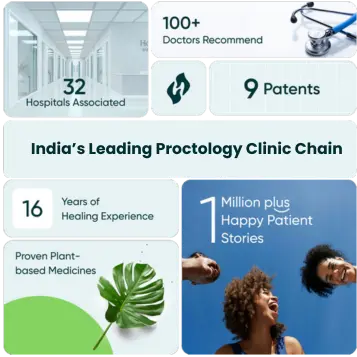
Healing Hands Clinic performs one of the highest numbers of Stapled Haemorrhoidopexies for haemorrhoids per month in Asia and is the centre where laser procedures for haemorrhoids were first introduced in India. Today, the clinic continues to perform a large volume of laser-based procedures using a focused proctology-only team. This specialised approach has helped reduce recurrence rates for haemorrhoids to less than 1%, compared to an industry average of 20–25%, supported by structured follow-up and long-term patient supervision now available to patients in Chh.Sambhajinagaras well.
Healing Hands Clinic is a NABH-approved (National Accreditation Board for Hospitals & Healthcare Providers) proctology centre and a recognised training institute in India certified by MUHS. The centre has trained over 100 surgeons and doctors from across Europe, the Middle East, and Asia, and is regarded as a centre of excellence for advanced proctology training.
Pilonidal sinus is a painful condition affecting the skin and underlying tissue of the buttock cleft. It is most commonly seen in young adults, especially those with deep skin creases or excessive body hair. The condition develops when hair follicles get trapped under the skin, leading to infection, pus formation, and bacterial growth. It often begins as a small cyst or swelling and may progressively become painful and recurrent if not treated.
An infected Pilonidal sinus will cause pain and discharge, which may require surgery.
In this traditional approach, the surgeon widely excises the skin and tissue covering the pilonidal sinus tract. The wound is left open to heal naturally. This method has a recurrence rate of around 10–15% and is considered safe in selected cases.
Healing time is prolonged and may take up to 3 months. Daily wound dressing is required, which can be uncomfortable and inconvenient for patients.
A minimally invasive laser-based procedure where the sinus tract is treated internally using laser energy. Patients are usually discharged within 24 hours and can resume routine activities within 4–5 days. Recovery is significantly faster than wide excision, with wound healing typically in 6–8 weeks. Recurrence rates are very low.
Mild post-procedure symptoms such as low-grade fever or chills may occur temporarily.
After excision of the sinus, the wound is closed primarily with sutures. The main advantage is faster healing, usually within 4–6 weeks.
Infection rates are relatively high (around 20–25%). If infection occurs, revision surgery may be required, and the wound is often left open for secondary healing.
In this technique, the abscess and sinus are removed, and triangular skin flaps are created and repositioned to close the cavity away from the midline.
This is not a preferred method due to higher chances of recurrence and technical complexity.
Used in severe or recurrent pilonidal sinus cases, especially when both buttocks are involved. An oval block of infected skin, fat, and abscess is removed, and a thick skin-fat flap from the nearby gluteal region is mobilised and sutured into the defect.
These procedures are more invasive, require hospital stay for several days, and have a long recovery period. Significant tissue removal may weaken the area and limit future surgical options if recurrence occurs..
We are recognized as the most innovative proctology hospital, pioneering our own treatment methods for intricate Anorectal conditions. Our primary focus is on curing with care.

Pilonidal sinus is most commonly observed among people who have long sitting hours, a sedentary lifestyle, and excessive hair on their bodies. At Healing Hands Clinic Shambajinagar, the doctors observe that many IT professionals, drivers, and students have pilonidal sinus because of increased sitting hours.
Pain, swelling, redness, or discharge around the area of the tailbone should be considered and prompt medical consultation should be sought, especially when symptoms such as these are present. At Healing Hands Clinic Shambajinagar, infection, which presents as repeated abscesses and discharge with an unpleasant odor, can be prevented with prompt consultation.
Depending on the stage of the disease, the treatment varies. Non-infected sinuses require maintaining hygiene and hair control, but infected and recurring pilonidal sinus disease requires surgery. Healing Hands Clinic Chh.Sambhajinagaruses advanced, painless laser surgery for the treatment of the disease.
It depends on the technique applied. Patients who undergo laser treatment at Healing Hands Clinic Chh.Sambhajinagarcan resume their daily activities the next day, whereas open surgeries may require longer healing and regular wound care.
Recurrence may happen if the tract is not completely treated. With advanced surgical technology to remove filaments coupled with guidance on personal hygiene and hair removal after the treatment, the chances of recurrence are minimized at Healing Hands Clinic Shambajinagar.
All health insurance plans offer cover for surgery. Healing Hands Clinic Chh.Sambhajinagarfacilitates health insurance approval, documentation, and cashless services where possible for their patients.
schedule your consultation with our experts now.
Welcome to Healing Hands Clinic, where our expert team provides compassionate and specialized care in proctology. Our state-of-the-art facility ensures the highest standards of treatment and comfort for our patients. We prioritize your well-being and strive to make your experience as seamless and stress-free as possible. Trust Healing Hands Clinic for professional and personalized proctological care.