
Piles (Hemorrhoids) Care
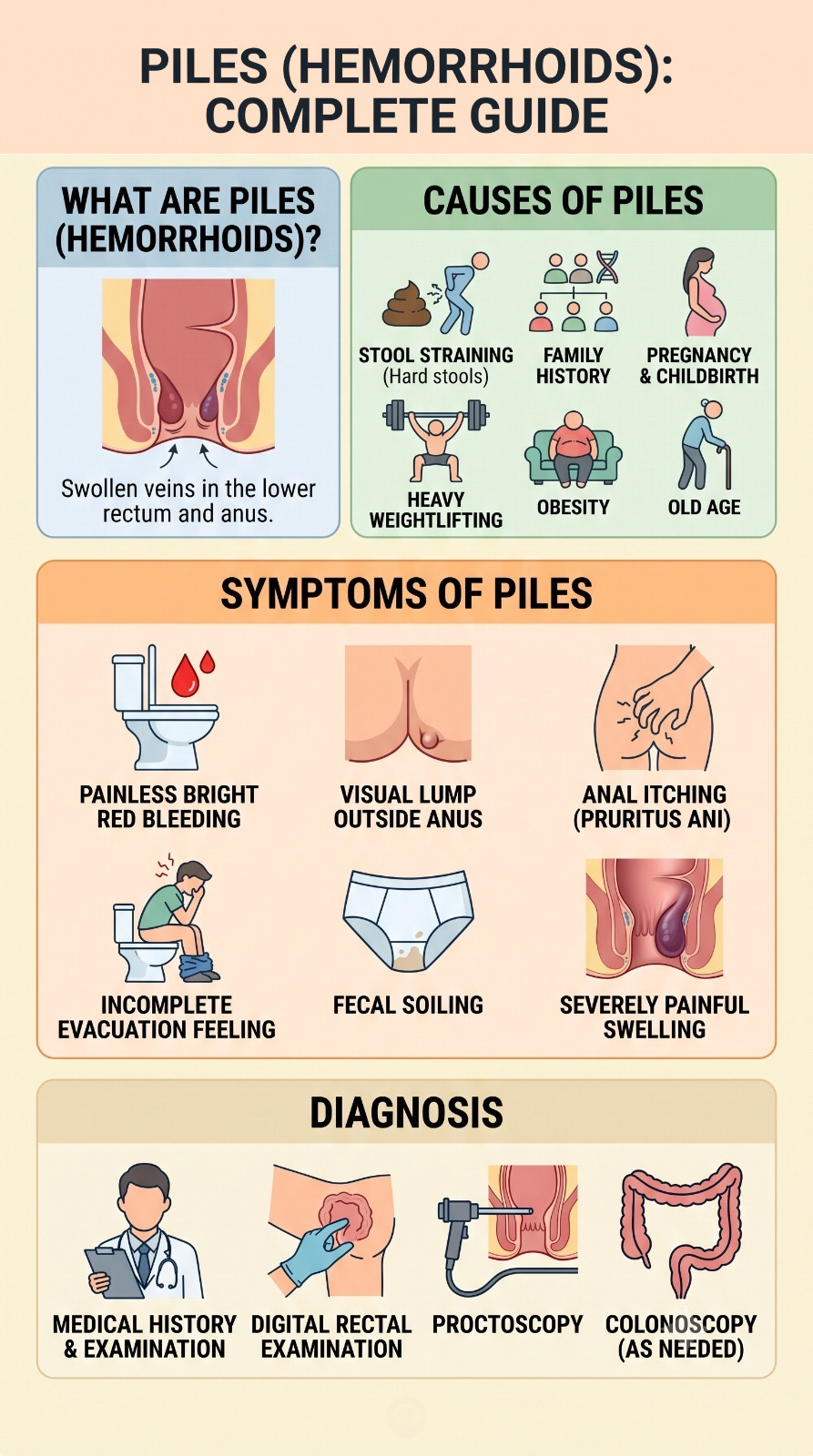
Piles (Mulvyadh / Bavasir), clinically known as Hemorrhoids, is the swelling of the veins near the anal opening. Increased pressure on these veins causes them to enlarge, forming lumps felt at the anal opening.
About Piles
Most people think piles are merely swollen veins near the anus.
That is medically correct.
But it misses the larger story.
Human beings were not designed to spend hours sitting on chairs, straining in toilets, staring at mobile phones, eating fibre-poor diets, and living under chronic stress. Yet modern life has quietly made these habits normal. The result is that the delicate cushions of blood vessels inside the anal canal begin to enlarge, descend, and eventually announce their presence through bleeding, pain, itching, or prolapse.
Piles—also known as hemorrhoids, mulvyadh, or bavasir—are therefore not merely a disease. They are often a symptom of how modern lifestyles collide with ancient human biology.
In fact, nearly one in two people will experience piles at some point in their lives.
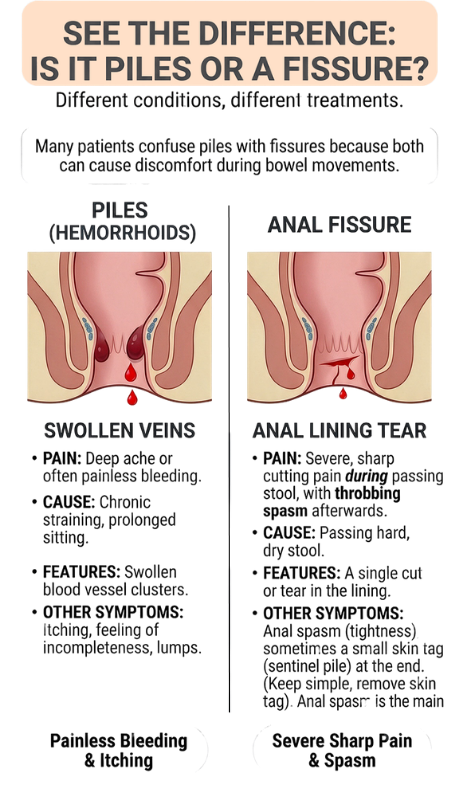
See the Difference: Is It Piles or a Fissure?
Many patients confuse piles with fissures because both can cause discomfort during bowel movements. Yet they are entirely different conditions requiring different treatments.
Severity Classification
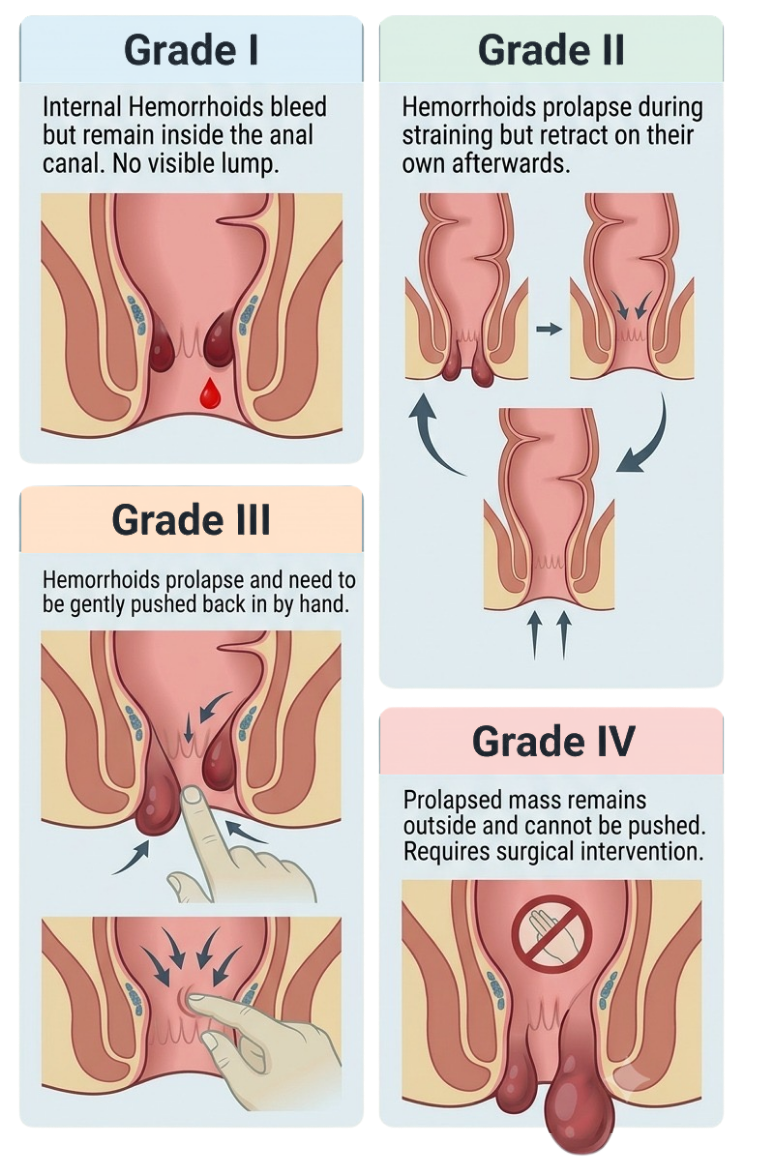
Like a river slowly eroding its banks, years of constipation, straining, prolonged sitting, pregnancy, obesity, or heavy lifting gradually increase pressure within the hemorrhoidal cushions. Over time these cushions enlarge and descend.
What begins as occasional bleeding can progress to prolapse, discomfort, and eventually a condition that interferes with daily life.
Internal Hemorrhoids bleed but remain inside the anal canal. No visible lump.
Hemorrhoids prolapse during straining but retract on their own afterwards.
Hemorrhoids prolapse and need to be gently pushed back in by hand.
Prolapsed mass remains outside and cannot be pushed back. Requires surgical intervention.
Comprehensive Care
Dr Ashwin Porwal, renowned Proctologist, has close to two decades of experience in treating Hemorrhoids. He introduced Leonardo Laser for Piles in India and performed the country's first Laser Hemorrhoidoplasty (LHP) at Healing Hands Clinic.
Today, the clinic treats more patients with LHP than any other center in the world. While grades I, II, III are treated with Laser, Grade IV requires MIPH (Stapler surgery). MIPH is the most popular technique worldwide, but carries a recurrence rate of 8%. Dr Porwal, with his immense experience, has modified the procedure by adding Horizontal Mucopexy, bringing the recurrence rate down to <1%.
His research papers have been published in top journals and he has presented at various national and international conferences. Dr Porwal has also trained many fellow surgeons from across the globe and received personal training from Dr Antonio Longo — inventor of MIPH (Stapler surgery).
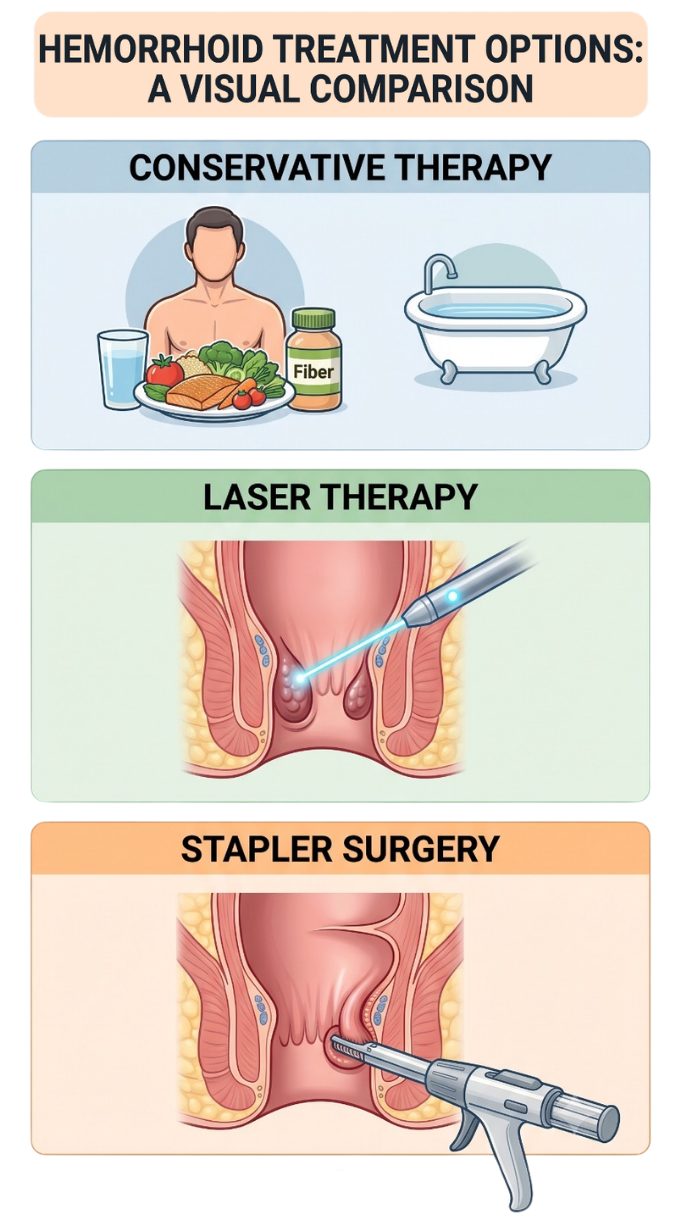
Till date >1 lac patients have been satisfactorily treated for their Piles at various Healing Hands Clinic centres across India.
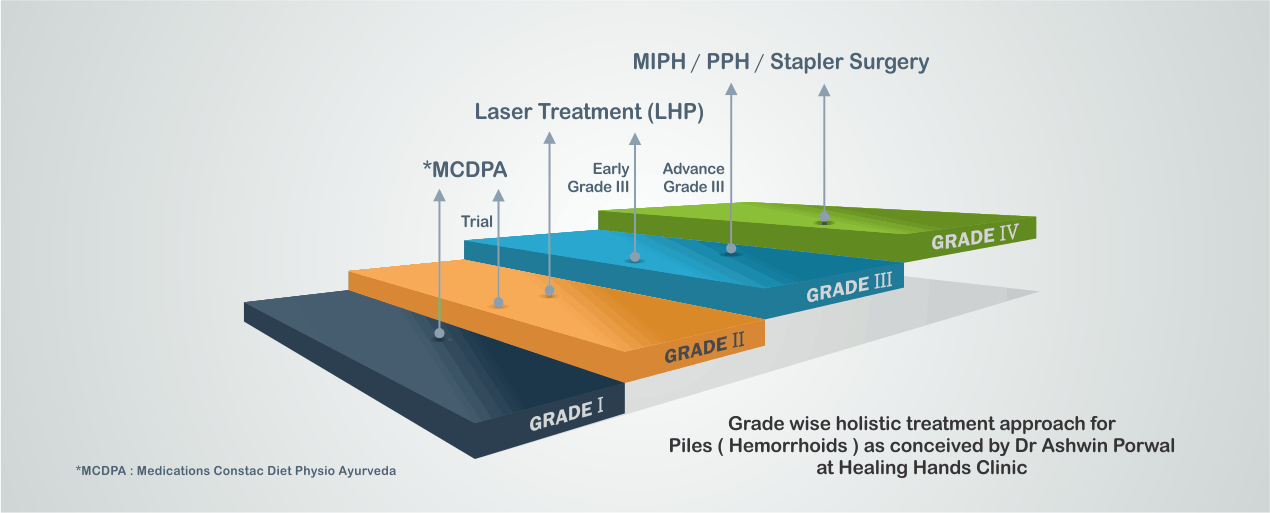
A conservative approach intended to halt and reverse early disease without any surgical intervention. This includes plant-based medicines and targeted dietary changes.
Medication — Creams (Anoac) and sprays (Anospray / Pilospray) for local relief and healing.
Constac — Plant-based granular formulation taken at night to regulate bowel movement naturally.
Diet Counselling — A qualified nutritionist curates a diet conducive to healthy bowel habits and corrects imbalances.
Physiotherapy — Pelvic floor physiotherapy to strengthen muscles in the anorectal region.
Ayurveda Therapy — Approximately 4–6 sessions of enema with medicated herbal oils for deeper, holistic healing.
Laser Hemorrhoidoplasty is the preferred treatment for Grade II and most Grade III Piles. Through the natural anal opening, laser energy is applied via a special radially emitting fiber, causing the haemorrhoidal mass to shrink through controlled vaporisation.
Advantages
Potential Drawbacks
Originally conceived in 1994 by Dr Antonio Longo, MIPH has become the treatment of choice for late Grade III and Grade IV prolapsed Piles. Using a circular stapler, the mucosa responsible for prolapse is circumferentially excised and the Hemorrhoids are repositioned back to their normal anatomical position.
Advantages
Potential Drawbacks
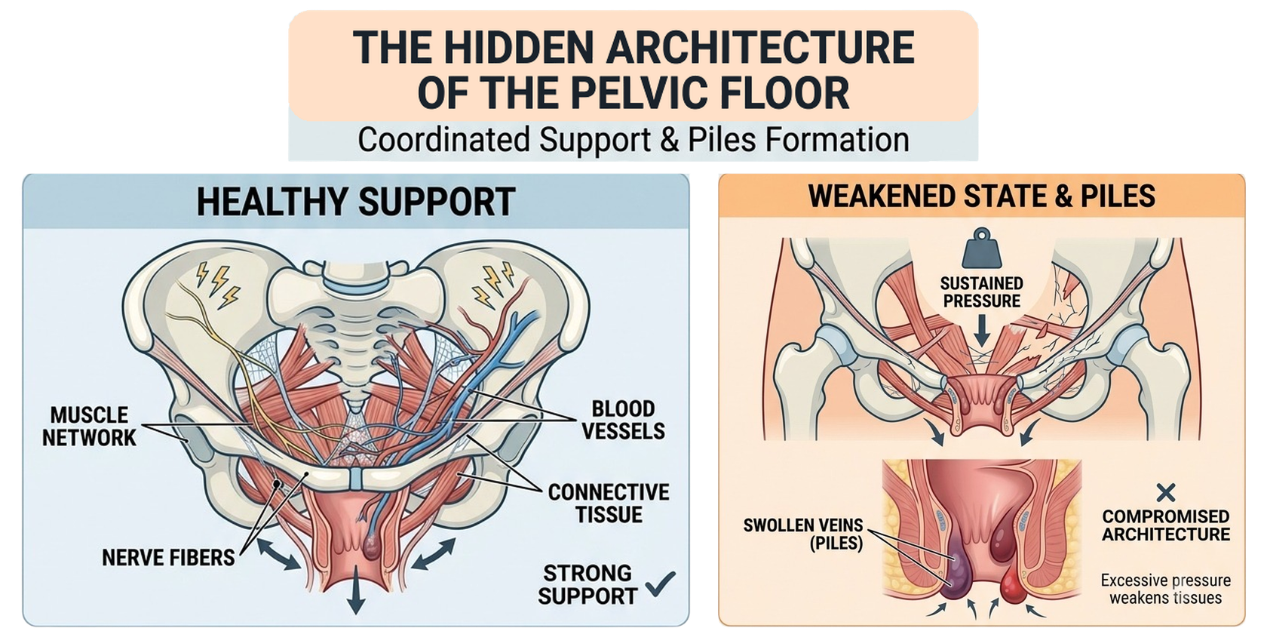
The anal canal is one of the most sophisticated structures in the human body. It relies on a coordinated interaction between muscles, nerves, blood vessels, and connective tissues.
When this architecture weakens or comes under sustained pressure, piles begin to develop.
Frequently Asked Questions
Contact your doctor immediately if you experience any of the following after your procedure:
Piles will affect at least 1 in 2 people at some point in their lives. Effective, minimally invasive treatment is available — there is no need to suffer in silence.
schedule your consultation with our experts now.
Healing Hands Clinic is India’s most trusted center of excellence for proctology, specializing in advanced, minimally invasive laser treatments for anorectal conditions. Founded by Dr. Ashwin Porwal, a pioneer who introduced laser proctology to India, the clinic provides world-class, focused care for ailments like piles, fistulas, fissures, pilonidal sinus, and chronic constipation. Utilizing state-of-the-art infrastructure and modern techniques like DLPL, they prioritize treatments that provide minimal pain, negligible recurrence rates, shorter hospital stays, and quicker recovery.

Disclaimer : The information on this site should not be considered as medical advice. Please consult a doctor for determining the best procedure as well as the most appropriate for your proctological needs.